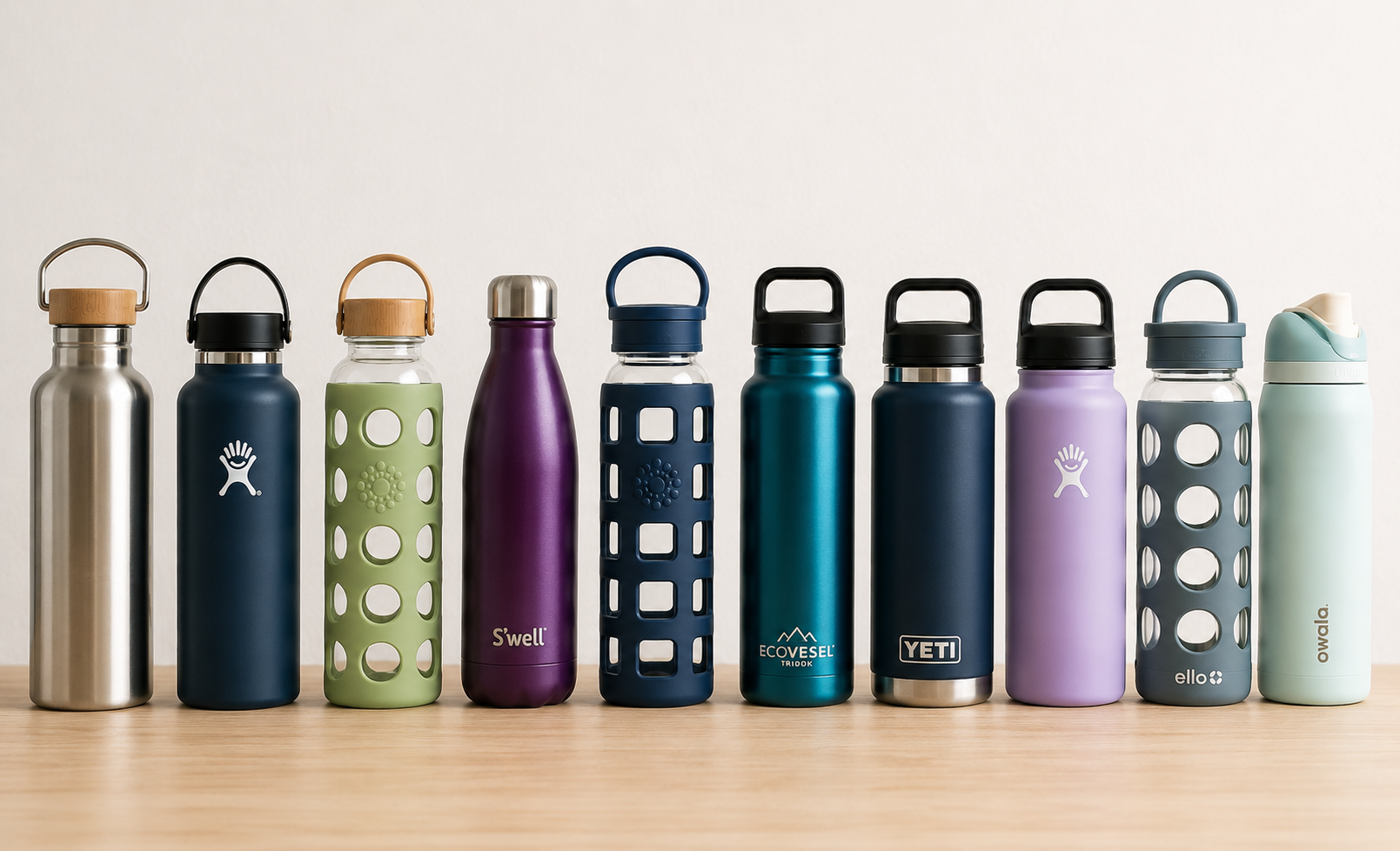
The 10 Best Non-Toxic Water Bottles (With the Least Plastic Contact) – 2026 Guide
Finding the best non-toxic water bottles became important to me after my Stage IV colon cancer diagnosis. One of the simplest changes I made was replacing the products I used every day—including my water bottle. It wasn’t because I believed one product caused my cancer. It was because I wanted to feel like I had some control over the choices I could make moving forward.
While no one can say a water bottle causes or prevents disease, my experience led me to become more intentional about reducing unnecessary exposure to plastics whenever possible. Since staying hydrated is something we do every day, choosing a high-quality reusable water bottle felt like an easy place to start.
If you’re looking for a water bottle that’s made from safer materials and minimizes plastic contact, this guide will walk you through what to look for and my favorite options available on Amazon.
Disclosure: This post contains affiliate links. As an Amazon Associate, I earn from qualifying purchases at no extra cost to you. I only recommend products I would feel comfortable using in my own home.
What Do I Mean by “Non-Toxic?”
You’ll hear the term non-toxic water bottle used often, but the truth is that no reusable bottle is completely free of every material someone may want to avoid.
When I use the term “non-toxic,” I’m referring to bottles made with materials that many people prefer for everyday use, such as food-grade stainless steel and glass, while minimizing unnecessary plastic contact whenever possible.
No reusable bottle is perfect, but some are made with materials that many people prefer for everyday use.
When shopping, I look for:
- ✅ 18/8 (304) food-grade stainless steel
- ✅ Borosilicate glass
- ✅ Stainless steel-lined lids whenever possible
- ✅ Food-grade silicone seals
- ✅ Brands that clearly disclose the materials they use
Because insulated bottles need leakproof lids, most still contain some plastic or silicone components. My goal isn’t perfection—it’s choosing bottles that keep plastic contact with drinking water as low as reasonably possible.
Quick Comparison
| Water Bottle | Plastic Contact | Insulated | Best For |
|---|---|---|---|
| Klean Kanteen Reflect | None | No (single-wall) | Best Overall |
| S’well | Minimal | Yes | Best Insulated |
| Purifyou Glass | Minimal | No | Best Glass |
| LifeFactory Glass | Minimal | No | Everyday Glass Bottle |
| Hydro Flask | Lid Only | Yes | Outdoor Adventures |
| EcoVessel Boulder | Minimal | Yes | Travel |
| YETI Rambler | Lid Only | Yes | Heavy-Duty Use |
| Healthy Human | Lid Only | Yes | Budget-Friendly |
| Ello Glass | Minimal | No | Budget Glass Option |
| Owala FreeSip | Mouthpiece & Lid | Yes | Convenience |
Not sure which bottle is right for you? Here’s the quick version. If you’re in a hurry, these are the bottles I’d recommend based on different needs.
| If you… | I’d Choose |
|---|---|
| Want the least plastic | Klean Kanteen Reflect |
| Love ice water | Hydro Flask Wide Mouth |
| Prefer glass | Purifyou |
| Need something tough | YETI Rambler |
| Want something stylish | S’well |
| Have kids | Owala with metal straws |
| Want to save money | Healthy Human |
The Best Non-Toxic Water Bottles I Recommend
1. Klean Kanteen Reflect – Best Overall
If I could recommend just one bottle, this would be it.
Why I Love It
- 18/8 food-grade stainless steel
- Stainless steel-lined cap
- Beautiful bamboo cap exterior
- Food-grade silicone gasket
- Water doesn’t sit against plastic
It’s simple, durable, and one of the best options for anyone wanting to minimize plastic contact.
My Take: If minimizing plastic is your top priority, this would be the bottle I’d choose.
Best For: Everyday hydration at home, work, or on the go.
2. Hydro Flask
Hydro Flask remains one of the most popular insulated bottles—and for good reason.
Pros:
- Excellent insulation
- Durable stainless steel body
- Multiple sizes and colors
- Wide-mouth options
The main drawback for low-tox shoppers is that the lid contains plastic components. However, the bottle itself is made from high-quality 18/8 stainless steel, and the wide-mouth design makes it one of the easiest bottles to fill with ice and clean.
My Take: If you love ice water, this would probably be my first recommendation. The wide-mouth opening makes it much easier to add ice and clean than my S’well bottle.
Things to Consider
- Wide opening is great for ice and cleaning.
- Plastic lid means it’s not the lowest-plastic option.
3. Purifyou Glass Bottle – Best Glass Bottle
If you love drinking from glass, this is one of my favorite choices.
Features include:
- Borosilicate glass
- Protective silicone sleeve
- Bamboo-style lid
- Stainless steel liner beneath the lid
Glass is naturally non-reactive and won’t retain flavors or odors.
My Take: If I mostly drank water at home, I’d seriously consider this one. I love drinking from glass, but personally I’d worry about breaking it if I carried it everywhere.
Things to Consider
- Easier to drink from than S’well.
- Opening isn’t as wide as many stainless steel bottles, so some large ice cubes may not fit.
4. S’well – Best Insulated Bottle
S’well combines premium insulation with sleek, modern style.
Features
- Triple-layer insulation
- Keeps drinks cold for up to 36 hours
- Stainless steel construction
- Durable powder-coated finish
The lid does contain some plastic components, but plastic contact is still minimal compared to many popular bottles. The top is also narrow, which helps with spilling all over when drinking. However, large pieces of ice are harder to get in the bottle. I like room temperature water so it doesn’t bother me. If you love a lot of ice, another option might be better for you.
Things to Consider
- Narrow opening makes it harder to add standard ice cubes.
- A bottle brush is helpful for cleaning.
5. LifeFactory Glass Bottle
LifeFactory has been a trusted name in glass drinkware for years.
Why people love it:
- Thick borosilicate glass
- Protective silicone sleeve
- Dishwasher safe
- Comfortable grip
It’s an excellent bottle for home, the office, or anyone who prefers the clean taste of glass. These bottles got me through chemo. With all of the weird side effects, glass was my only option.
6. EcoVessel Boulder
The EcoVessel Boulder is designed for travel and outdoor adventures.
Features:
- Triple insulation
- Stainless steel interior
- Comfortable carrying handle
- Excellent temperature retention
Some models include stainless steel-lined caps, so be sure to check the product details before purchasing.
7. YETI Rambler
If durability is your top priority, YETI is hard to beat.
Perfect for:
- Camping
- Long workdays
- Construction sites
- Road trips
Like Hydro Flask, most of the plastic is limited to the lid.
8. Healthy Human
Healthy Human offers excellent value without sacrificing quality.
Highlights:
- 18/8 stainless steel
- Double-wall vacuum insulation
- BPA-free lid
- Multiple sizes and colors
It’s a great option if you’re looking for a quality insulated bottle at a more affordable price.
9. Ello Glass Bottle
Ello makes attractive, budget-friendly glass bottles.
Why it’s worth considering:
- Glass construction
- Silicone sleeve
- Easy to clean
- Affordable price point
This is a great entry-level option if you’re making the switch away from plastic.
10. Owala FreeSip
Owala has become incredibly popular, especially for busy families.
People love:
- Leakproof design
- Built-in straw and sip opening
- Comfortable carry loop
- Excellent insulation
However, because both the mouthpiece and lid contain plastic, I rank it lower for those specifically trying to minimize plastic contact. I do replace the plastic straws in my Owalas with these stainless steel straws.
Remember: You don’t have to replace everything overnight. These little swaps add up over time.
What I Try to Avoid
While everyone has different comfort levels, I personally try to avoid:
- Plastic bottles for everyday use
- Bottles with unknown interior coatings
- Aluminum bottles with epoxy liners
- Bottles that don’t specify the type of stainless steel used
- Very inexpensive bottles with little information about their materials
Do Water Bottle Lids Matter?
Yes—but the answer isn’t always black and white.
Most insulated bottles use plastic or silicone in the lid because those materials help create a secure, leakproof seal. What I pay the most attention to is whether the water sits in prolonged contact with plastic while it’s stored or carried.
If reducing plastic exposure is important to you, look for bottles with:
- A stainless steel interior
- Stainless steel-lined caps when available
- Minimal plastic in the drinking path
Remember, you don’t need to find a completely plastic-free bottle to make a meaningful improvement.
Is It Worth Replacing a Water Bottle You Already Own?
If you already own a reusable bottle, I don’t think you need to throw it away just because it isn’t “perfect.” I believe in replacing products as they wear out rather than creating unnecessary waste. When it’s time for a new bottle, that’s a great opportunity to choose one made from materials you feel good about.
Why I Didn’t Recommend Plastic Water Bottles
- BPA-free doesn’t necessarily mean plastic-free.
- Stainless steel and glass are generally more durable and don’t absorb odors or flavors the way plastic can over time.
- Many people simply prefer reducing plastic use where practical.
Frequently Asked Questions
Is stainless steel better than plastic?
Many people prefer food-grade stainless steel because it’s durable, resistant to corrosion, and doesn’t absorb flavors or odors the way plastic can over time.
Is glass the safest material?
Glass is completely non-reactive, making it an excellent option for people who don’t mind a heavier, more fragile bottle.
What does 18/8 stainless steel mean?
18/8 stainless steel—also known as 304 stainless steel—is a food-grade alloy that contains approximately 18% chromium and 8% nickel. It’s widely used in cookware and reusable drinkware because of its durability and resistance to rust.
Are BPA-free bottles okay?
BPA-free bottles are generally an improvement over older plastics, but if you’re already replacing your bottle, many people choose stainless steel or glass to further reduce their use of plastic.
My Final Thoughts
Living a lower-tox lifestyle isn’t about being perfect—it’s about making thoughtful choices where you can.
Replacing my everyday water bottle was one of the easiest swaps I made after cancer, and it’s a habit I’ve continued because it’s simple, practical, and sustainable.
Remember, you don’t have to replace everything overnight. I didn’t. Every time one of my old products wore out, I replaced it with a healthier option. Those small choices have helped me create a home that better reflects the lifestyle I want to live.
If you’re not sure where to start, these are my top picks:
Best Overall: Klean Kanteen Reflect
Best Insulated: S’well
Best Glass: Purifyou
Best for Durability: YETI Rambler
Best Budget Pick: Healthy Human
No matter which bottle you choose, replacing disposable plastic bottles with a quality stainless steel or glass option is a simple step toward creating a healthier home—one small swap at a time.
Need more non-toxic living tips? Check out these articles.